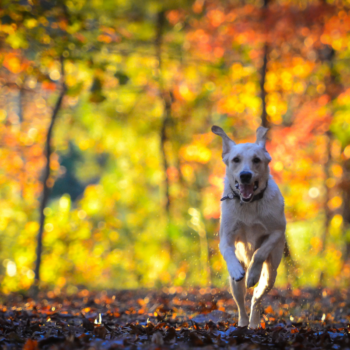
That’s it! Autumn has arrived with its beautiful colors and mild temperatures…
Many take the opportunity to spend more time outside, whether it is to do small jobs around the house to slowly prepare for winter, or simply to enjoy the beautiful colorful landscape. However, without thinking about it, this season involves some natural dangers for your animals. We therefore offer you 6 tips not to be overlooked this season in order to ensure the safety of your canine or feline companion;
1. Outdoor plants
It is possible that you enter a few outdoor plants for the winter season in order to preserve them. With the arrival of autumn, take the opportunity to inventory your interior foliage to ensure that none of your plants are toxic for your animals. Pets often driven by curiosity are attracted to plants for their shapes or even their smells. There are several onlines resources to know the toxicity of your plants, we suggest your start your verification with this little guide created by the Centre Hospitalier Universitaire Vétérinaire (CHUV).
 2. Bulbs
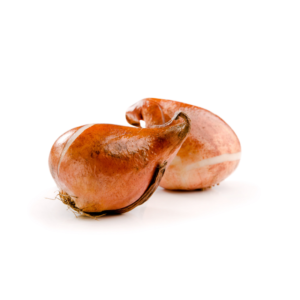
Many take advantage of autumn to plant flower bulbs in order to color their flower-beds in the spring. However, did you know that some flower bulbs are toxic to animals? Of course, here dogs are more at risk since some have the bad habit of digging and chewing objects. For example, tulip and hyacinth bulbs, when ingested, can cause irritations in the esophagus and cause problems of extreme salivation and diarrhea.
When you plant your bulbs, keep your dog away. When he goes outside, watch him so he doesn’t dig up your bulbs!
Here are some resources to learn more about toxic plants for your pet;
3. Wild mushrooms
In the fall, you probably noticed that mushrooms of all kinds of shapes and colors appear on your land. Watch your dog well so that he does not eat mushrooms, because often they can be very toxic for him. Just like indoor plants, mushrooms attract animals by their shape and smell. You can simply remove them or even increase your vigilance when your dog is outside or during a walk in the forest.
4. Decorative corn cobs
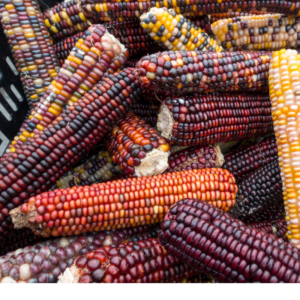
Many people like to decorate their entryway or house with dried corn on the cob. Once again, as during the corn season in August, the cobs can be extremely dangerous for animals. Their shape and look are very attractive for dogs who like to chew them, however the spike is not digestible and has an ideal diameter to cause a severe intestinal blockage.
Once again, make sure that your decoratives spikes and any other decorative objects that might tempt your pet are installed at a certain height in addition to being well fixed so as not to allow your pet to chew it.
5. Hunting
The beginning of fall also heralds hunting season in the province. Although it is not forbidden to walk in the forest with your dog during the hunting season, it is very important to increase viligance. For example, find out if hunters are present in the area where you usually walk. Often, posters are created at the entrance of trails to inform walkers.
Moreover, if you used to leave your dog in the forest (private land), it is strongly recommended to keep it on a leash for better control of your pet. In a public forest, the law requires you to keep your dog on a leash at all times. Also, make sure to stay on the beaten path, respect the signage (marked or closed paths), and opt for colorful clothing or accessories for you and your canine companion.
6. Rat and mouse poison
Autumn also rhymes with the arrival of less desired small animals in our homes that seek warmth. Although serveral techniques exist to prevent mice from entering your homes, some will opt for the use of poison. Obviously, be very careful to ensure that your cat or dog never has access to this product, because of course it will be as toxic for your cat as a mouse.
Learn more about this type of poisoning by consulting this article from the Centre Hospitalier Universitaire Vétérinaire (CHUV).
On that, autumn is a beautiful season to spend outdoors with your animals! By combining these valuable safety tips in addition to adopting the right behavior during outdoor outings, you will be able to make the most of it!